

If your garage floor looks bad, you’re not alone. Most people have cracked, stained concrete sitting in their garage. Every day it gets worse. But you can actually do something about it. A lot of homeowners in Longmont and Boulder are choosing to get professional epoxy Garage installation done. It changes everything about your garage.
This guide explains what garage floor refinishing is, why you might want it, and what it costs. It’s not as complicated as it sounds.
Why Your Garage Floor Is Falling Apart
Think about what your garage floor goes through every single day. Cars sit on it. They leak oil. Water drips everywhere. In winter, you track road salt and snow. All of this soaks into the concrete.
Regular concrete is like a sponge. Once something gets in there, it stays. Oil gets trapped inside. Water seeps deep into the slab. Salt eats away at the concrete from the inside. Your garage floor keeps getting worse and worse.
Colorado makes this even harder on your floor. Winter comes and the freeze-thaw cycle destroys concrete. Water gets into tiny cracks. It freezes and expands. The cracks get bigger. Then it thaws. More cracks form. This happens over and over. By the time summer comes, your floor is falling apart.
After a few years, your garage floor is cracked, stained, and crumbling. It looks terrible. Your whole garage looks bad because of it. And the damage keeps spreading.
What Residential Garage Flooring Actually Does
Residential garage flooring is basically a protective coating that goes on top of your concrete. The most common type is epoxy. Epoxy is like plastic. It’s hard. It’s smooth. It stops everything from getting into your concrete.
Here’s what epoxy does for you:
First, it protects your concrete. Nothing gets through it. Oil can’t soak in. Water can’t get in. Salt can’t reach the concrete underneath. Your concrete stays protected from damage.
Second, it makes your garage look way better. The surface is shiny and reflective. Your garage gets brighter. It’s easier to see things. The whole space feels nicer. It actually feels like part of your home instead of just a place to park your car.
Third, it makes everything easier to clean. No more concrete dust covering everything. No more stains that won’t come out. You just sweep and mop. That’s it.
If you use your garage for anything real—working on cars, a workshop, a gym, storage—epoxy makes a huge difference. You can actually work there without getting filthy.
The Real Cost of Garage Floor Renovation
Let’s talk about money. This is what everyone wants to know first.
Professional epoxy installation in the Longmont and Boulder area costs between $3 and $15 per square foot. That’s a big range, and I’ll explain why.
A normal two-car garage is about 400 to 500 square feet. That means you’re probably looking at $1,100 to $4,300 total. Most people pay somewhere around $2,000 to $3,000 for a good system.
Why such different prices? Because there are different types of residential garage flooring you can get.
The cheapest option is called grind-and-seal. It’s basic protection. It’s cheaper, but it works fine if that’s all you need.
The middle option is a decorative flake system. It costs more but looks really nice. You can pick different colors and styles.
The most expensive option is metallic finishes. These look like art on your floor. They’re beautiful but they cost the most money.
You might see DIY kits at the hardware store for a few hundred dollars. Don’t buy these. I know it’s tempting because it seems cheap, but it almost never works out. These kits use cheap materials that don’t last. Most people who try it end up with a floor that peels and bubbles after one winter. Then they have to pay a professional anyway. So they wasted money and still didn’t get what they wanted.
Professional epoxy installation costs more upfront, but you get a floor that actually lasts. The materials are way better. The prep work is done right. The finish lasts years instead of weeks. In the end, you save money because you don’t have to redo it.
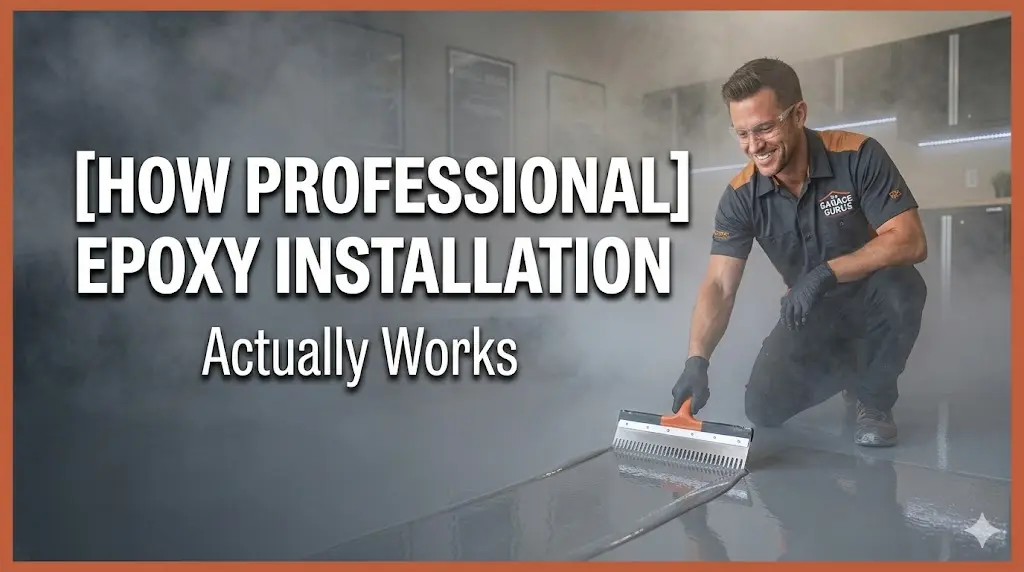
How Professional Epoxy Installation Actually Works
This is the part that really matters. The difference between a floor that lasts ten years and one that fails in a few months comes down to one thing: how the concrete is prepared.
A lot of people think contractors just paint epoxy on the concrete. That’s wrong. If you just paint on raw concrete, it won’t stick. It will peel. It will bubble. It will fail. Nobody wants that.
Real professional epoxy installation starts with grinding. Contractors use special diamond grinding tools. These tools rough up the concrete surface. This opens up the tiny pores in the concrete so the epoxy can bond with it. This is the most important step. Without this, nothing else works.
While they’re grinding, they look for cracks and damage. Any cracks they find get filled with special epoxy mortar. Any pits or holes get fixed. The goal is to have a smooth, level surface ready for coating.
Then everything gets cleaned really well. They remove all the dust. They remove all the oil. They might even test how much moisture is in the concrete. This matters because if there’s too much water in the slab, the epoxy won’t stick right.
After cleaning, they put down a primer coat. This helps the epoxy stick even better to the concrete. Then they apply the main epoxy coating. This is usually two coats. Finally, they add a topcoat for protection and grip.
The whole job takes a few days. Your garage isn’t usable while they’re working. But when it’s done, you have a floor that will actually last for years.
Taking Care of Your New Floor
Here’s the best thing about having epoxy: it’s super easy to take care of.
You don’t need special products or fancy equipment. Just sweep it with a soft broom. Use a regular mop with some water. Done. Your floor stays clean.
If you spill something, wipe it up. Most stuff just comes right off. If you spill oil or something greasy, wipe it with a shop towel and use a mild degreaser if you need to. The whole cleanup takes five minutes.
Don’t use harsh chemicals or rough scrubbers. These can damage the finish. Don’t use soaps that leave a residue on the floor. Keep it simple.
With basic care, your epoxy floor looks good for years. If you take care of it, it can last ten years or more.
Is Garage Floor Refinishing Worth It?
The answer depends on how you use your garage.
If you just park your car in there and nothing else, maybe it’s not as important. But if you actually use your garage for anything—working on cars, doing projects, storing stuff then yes, it’s worth it.
Regular concrete is a mess. It’s always dusty. Oil stains everything. It’s hard to keep clean. Everything in your garage gets covered in concrete dust. It’s gross.
Epoxy stops all of that. No more dust. No more stains that won’t come out. Cleanup is fast and easy.
Plus, in Colorado, the freeze-thaw cycle destroys concrete year after year. Your floor just gets worse and worse. Epoxy stops this. It protects your concrete so it doesn’t degrade. Your floor stays solid.
A lot of homeowners say the money was worth it just for peace of mind. You’re not worried about your floor falling apart. You’re not spending hours cleaning. You’re not tracking dust into your house. Plus, if you ever sell your house, a nice garage floor looks good to buyers. It shows you take care of your home.
FAQS
How long will it last?
A professionally installed epoxy floor usually lasts five to ten years with normal use. If you take good care of it, it can last longer. If your garage gets really heavy use or you use chemicals a lot, you might need to refresh the topcoat sooner. But for most people, five to ten years is realistic.
Will it get slippery when wet?
Regular epoxy can be slippery when wet. That’s why professionals always add anti-slip stuff to the topcoat. These are tiny particles that give your floor grip. You can’t see them much, but they work. In Colorado where you might bring a snowy car inside, this is important for safety. Your floor will be safe to walk on.
Can you coat over cracks?
You can put epoxy over cracks, but you have to fix them first. If you just coat over a crack, the epoxy will fail when the concrete keeps moving and shifting. Professional installers fill cracks with special epoxy mortar first. They level everything out. Then they coat it. This way the cracks are actually fixed, not just hidden.
Should I do it myself?
Hire a professional. DIY sounds cheaper, but it usually isn’t. Professionals have equipment you don’t have. They know how to prepare concrete the right way. Without proper prep, your floor will fail. Most DIY jobs fail in a few months. It’s not worth trying to save money here.
When can I use my garage again?
You can walk on the floor after 24 to 36 hours. But don’t drive cars there yet. Wait at least three to seven days before you park vehicles back in there. The epoxy needs time to cure and harden completely. Always ask your installer exactly how long to wait. Different products cure at different speeds.