
The Southwest Florida Paver Sealing Guide: Everything Homeowners Should Know
By Aaron Kochheiser, owner of Paver Savers & Concrete, LLC. Sealing pavers in Fort Myers, Cape Coral, Naples, Estero, Bonita Springs and Lehigh Acres since 2010.

Quick answer
- Should you seal pavers in Southwest Florida? Yes, for most driveways, pool decks and patios. Sealing guards against our sun, rain, mildew and stains. It also locks the joint sand in place, which helps keep out weeds and ants.
- Best sealer type here: a two-part water-based urethane. It's tougher than a basic acrylic and handles the humidity better. We seal with Cobble Loc by Surfacelogix, a Florida company making paver sealers since 1950.
- How often: every 2 to 3 years. On our annual maintenance plan, your pavers are cleaned and sealed every year.
- Cost: most of our clients pay between $1.10 and $1.50 per square foot. That includes cleaning, joint sand and sealer.
- Back to normal: you can walk on it after 1 hour and drive on it the next day.
- Best time of year: the dry season (roughly November through April) is the easiest time to schedule.
- Questions? Call (239) 900-4410. We answer 24/7.
Table of contents
- Why sealing matters more in Southwest Florida
- What sealing does for your pavers
- Paver sealer types compared
- Wet look vs. natural look
- When to seal: new pavers, weather and the best season
- How we seal pavers, step by step
- Cure times: when you can walk, drive and water
- How often to reseal
- How much paver sealing costs
- DIY vs. hiring a pro
- Common sealing problems and how to fix them
- Pool decks and travertine
- Aftercare: keeping sealed pavers looking new
- Printable paver sealing checklist
- FAQ
1. Why sealing matters more in Southwest Florida
Most sealing guides online are written for places with snow and freeze-thaw cycles. Our pavers wear out in different ways. Here's what Southwest Florida throws at driveways and pool decks from Lehigh Acres to Naples:
- Strong sun all year. UV fades paver color, especially reds, tans and blends. An unsealed driveway in full sun can look washed out within a few years.
- A real rainy season. Fort Myers averages about 57 inches of rain a year, and roughly two-thirds of it falls from June through September. Most of it comes in heavy afternoon storms (NOAA normals). Downpours like that wash sand out of paver joints, and without joint sand the pavers loosen, shift and sink.
- Mold, mildew and algae. With our heat and humidity, shady areas, north-facing walkways and screened pool decks can turn green or black in one summer.
- Weeds and ants. Weeds and ant mounds move into open joints fast. Fire ants love the sand under pavers.
- Rust from sprinklers. Many neighborhoods water lawns with well water that carries iron. When sprinklers hit the pavers, they leave orange stains (more on irrigation rust).
- Salt air and pool chemicals. Near the coast and around pools, salt and chlorine add wear to the surface.
- Efflorescence. That chalky white haze on newer concrete pavers comes from minerals rising out of the paver as moisture evaporates. More on this below.
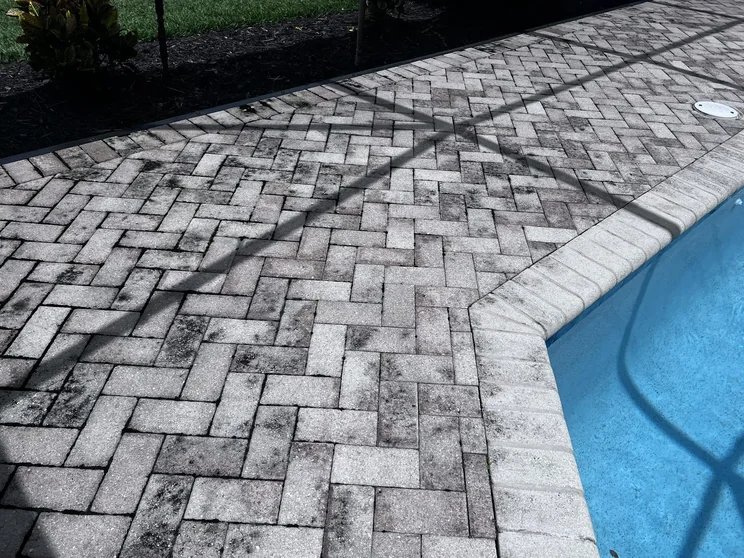

2. What sealing does for your pavers
A good sealer won't make pavers last forever, but it will make them much easier to live with.
| Benefit | What it means for you |
|---|---|
| Color comes back | Sealer brings faded pavers back toward their original color, or richer if you choose a wet look. |
| Locks joint sand | A joint-stabilizing sealer bonds the sand between pavers so storms, leaf blowers and hoses don't wash it out. |
| Fewer weeds and ants | Locked, sealed joints leave weeds and ants far fewer places to get started. |
| Stain resistance | Oil, grease, leaves, rust and spills sit on top longer, so they're easier to clean before they set in. |
| Easier cleaning | Dirt and mildew rinse off a sealed surface more easily. |
| UV protection | Slows color fading from the sun. |
| Curb appeal | A clean, sealed driveway is one of the quickest ways to make a home look cared for, especially before you sell. |

Is sealing worth it? For most Southwest Florida homes, yes. The sand you'd otherwise keep replacing, the weeds you'd keep pulling and the pavers you'd eventually have to relevel after washouts add up to more than the cost of sealing. A shaded, rarely used walkway is the main exception, and we'll tell you if we think yours doesn't need it.
3. Paver sealer types compared
Not all sealers are the same. Here's an honest look at the four main families you'll run into.
| Sealer type | Look | Pros | Cons | Typical use |
|---|---|---|---|---|
| Water-based acrylic | Natural to semi-gloss | Inexpensive, low odor, easy to apply, sold at big-box stores | Softer film that wears faster in sun and traffic. Can turn cloudy if moisture is trapped. Needs recoating more often. | DIY patios and walkways |
| Solvent-based acrylic | High gloss "wet look" | Deep color and shine right away | Strong fumes and flammable. Very sensitive to moisture, so it can turn white or milky on damp pavers. Can get slippery. Can build up and peel over repeated coats. | Typically rolled on. Not recommended for Florida's outdoor environment. |
| Two-part water-based urethane (what we use) | Enhanced, semi-gloss wet look | Parts A and B react to form a hard, cross-linked film. Better chemical, oil, UV and tire-mark resistance than acrylics. Locks joint sand. Low VOC. | Costs more. Must be mixed correctly and used within a set time (pot life), which is why it's mostly a professional product. | Driveways, pool decks, patios, lanais |
| Penetrating (silane/siloxane) | Invisible, no sheen change | Soaks into the paver and breathes. Nothing on the surface to peel. Not slippery. | No color boost or shine. Usually doesn't lock joint sand. Doesn't stop weeds, ants or washout the way a joint-stabilizing film does. | Natural stone, clay brick, areas where the owner wants zero change in look |
Why we use a two-part water-based urethane: In Southwest Florida, the two things that ruin a sealing job are moisture and sun. A two-part water-based urethane handles both better than an acrylic, and it bonds the joint sand, which matters a lot in rainy season. We seal with Cobble Loc by Surfacelogix, a Florida company making paver sealers since 1950. According to the manufacturer, it resists oil, gasoline, brake fluid, bleach and acids, helps hold back weeds and ant hills, and is low-VOC (Surfacelogix).
Watch out for cheap "wet look" sealers that promise a high gloss for a low price. They're often solvent-based acrylics, and in our humidity those are the sealers most likely to turn white or start peeling.
4. Wet look vs. natural look
This is the first thing most homeowners ask about, and it's mostly a matter of taste.
| Wet look (enhanced) | Natural look | |
|---|---|---|
| Appearance | Deeper, richer color with a soft sheen, like the pavers were just rinsed | Close to the bare paver, just cleaner and a little more even |
| Best for | Driveways, entryways, color blends you want to show off | Homeowners who want an understated look, some natural stone |
| Slip resistance | Smoother when wet. Pavers don't need a grip additive. On natural stone and travertine, it's an option we can add. | Closest to an unsealed paver |
| Hides wear | Makes faded pavers look new again | Shows the paver's true age more |
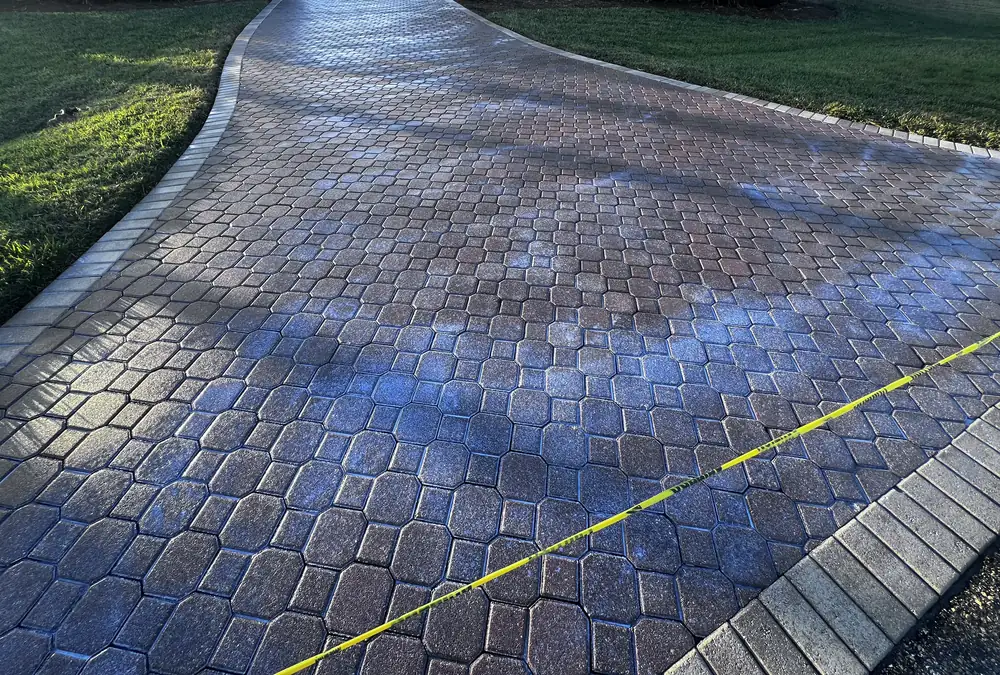
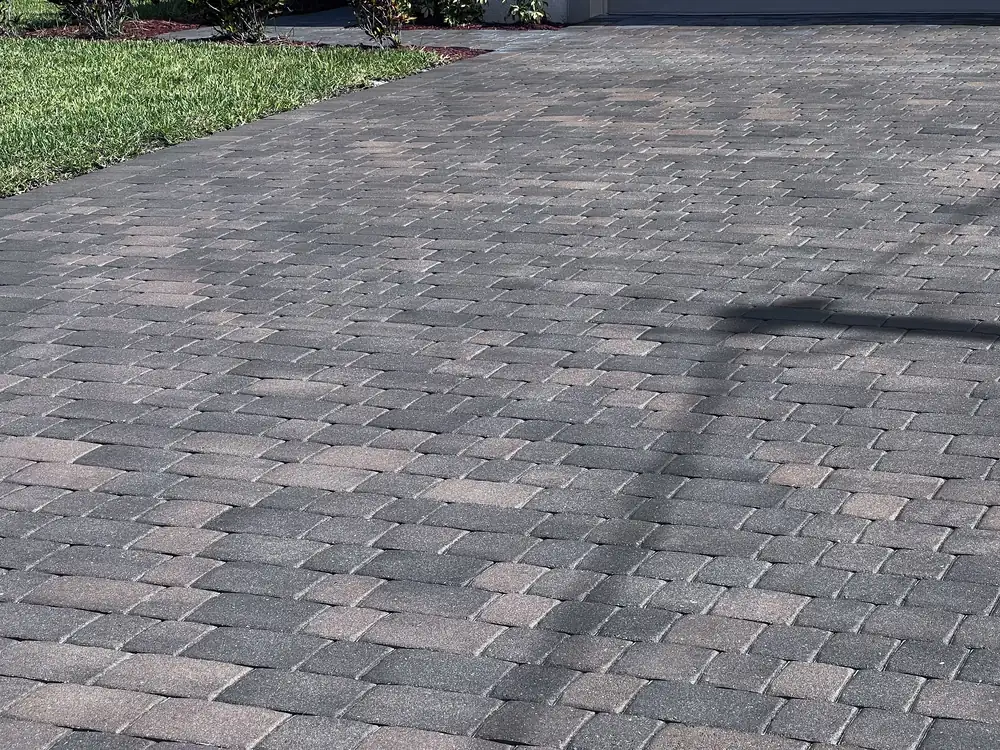
Our tip: Can't decide? Look at your pavers right after a rain. That's close to what a wet look gives you. Love it? Go wet look. Too dark? Go natural.
Are wet-look sealers slippery? Any sealed surface can feel a little smoother when wet, especially in bare feet on a pool deck. Pavers don't need a grip additive. On natural stone and travertine, a grip additive is an option we can add (Cobble Loc is available with grip).
5. When to seal: new pavers, weather and the best season
Sealing brand-new pavers
New concrete pavers often push out efflorescence, a white mineral haze, for the first few months. If you seal over it, it gets trapped under the sealer. Industry guidance recommends waiting about 60 to 90 days after installation before sealing so most of that has a chance to come out and can be cleaned off first (ICPI consumer guide; CMHA Tech Spec 5). Every installation is different, though, so we'll look at your new pavers and tell you when they're ready.
Weather
- No heavy rain in the forecast for the first several hours after sealing. A light sprinkle after the sealer has set is usually fine. A downpour on wet sealer is not.
- Not too cold. The sealer we use shouldn't go down when the air or surface is below 50°F, per the manufacturer. That's rarely an issue here.
- Not in standing water. Puddles and low spots have to drain first.
- Not on sun-baked pavers. On a July afternoon, pavers can get hot enough that sealer dries before it has a chance to soak in and level out. That can leave streaks or an uneven sheen. Early in the day, before the pavers heat up, is the better window.
The best season in Southwest Florida
The easiest time to seal is our dry season, roughly November through April, when Fort Myers gets about 2 inches of rain a month or less (NOAA). Summer works too. We just plan around the afternoon storms by working in the morning and keeping an eye on the radar. A lot of homeowners like to seal in spring, before rainy season, so the joints are locked before the summer storms arrive.
6. How we seal pavers, step by step
A sealer is only as good as the prep underneath it. Here's how we do it on every job.
Step 1: Inspect the surface with you
We walk the driveway, pool deck or lanai with you. We look at the paver type, any old sealer, the joints, low spots and how water drains off the area. Any existing sealer is inspected visually. If it has turned white, cloudy or is peeling, it needs to come off first (see paver stripping).
Step 2: Pressure clean
We clean off dirt, algae, mildew, tire marks and general buildup with professional surface cleaners. The goal is to clean deep into the paver surface without damaging it.

Step 3: Treat stains
Some stains need more than water. Rust from sprinklers, oil drips on driveways and stubborn mildew may need a dedicated cleaner, and they should be dealt with before sealing, since sealing over a stain locks it in.
Step 4: Make repairs
Sunken, rocking or cracked pavers and loose borders get fixed before anything is sealed. Sealer won't fix a low spot. Water will still pond there, and the sealer can look cloudy where it does. Learn more about paver repair.
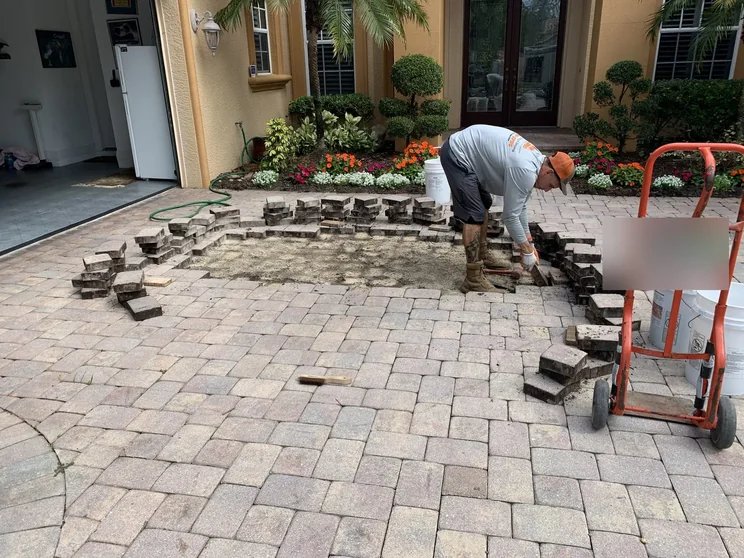
Step 5: Refill the joints with fine mason sand
Cleaning blows out some of the joint sand, so we refill the joints with fine mason sand and sweep the paver faces clean. The sealer then locks that sand in place, and it locks in better than polymeric sand. It also levels better, fully cures with the sealer and doesn't take on the mold and algae staining polymeric sand does. We only use polymeric sand if you request it.

Step 6: Mind the moisture
With many sealers, you have to wait for the pavers to dry completely, which can take a day or more in our humidity. The sealer we use is designed to go down the same day as cleaning, even on damp pavers (Surfacelogix). That's a big advantage in rainy season. Standing water and storms are still off-limits for any sealer.
Step 7: Apply the sealer
Cobble Loc is a two-part product. Part A and Part B are mixed, diluted as the manufacturer directs and used within their working time. Then we spray the sealer on in an even coat, with no puddles or lap marks. We don't roll it. Rolling is traditionally used only with solvent-based sealers, which aren't recommended in Florida's outdoor environment.

7. Cure times: when you can walk, drive and water
| What | When |
|---|---|
| Walking | After 1 hour |
| Driving / parking | The next day |
| Furniture, grills, planters | The next day is a safe rule. Lift items into place, don't drag them. |
| Sprinklers | Keep any zones that hit the pavers off until the sealer has cured. Ask us for the timing on your job. |
What if it rains after sealing? A passing shower after the sealer has set is usually fine. A heavy downpour soon after application can leave spots or a cloudy look. We plan around storms for this reason. If a surprise storm hits your freshly sealed job, give us a call and we'll take a look.
8. How often to reseal
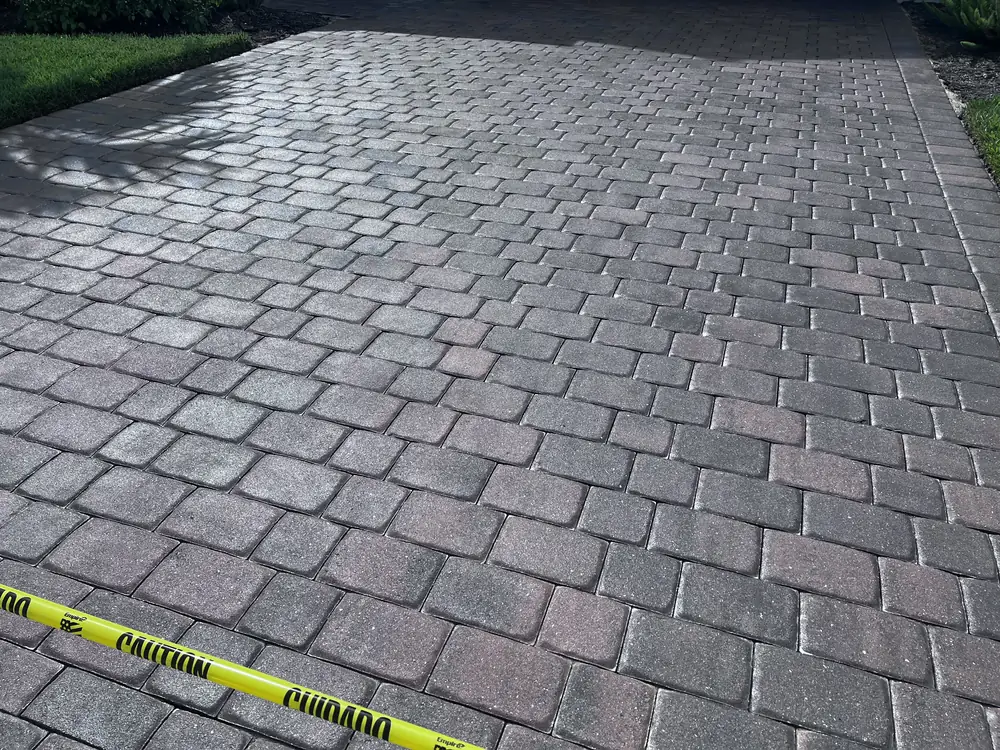
Plan to reseal every 2 to 3 years. National guides often say 3 to 5 years, but those numbers are usually based on milder climates. Our sun and rain wear sealers faster.
Signs it's time:
- Water soaks in and darkens the pavers right away instead of beading.
- The color looks flat and faded again.
- Sand is washing out of the joints, or weeds and ant mounds are coming back.
- Mildew is returning quickly after you clean.

Prefer not to keep track? Our annual maintenance plan keeps your pavers freshly cleaned and sealed every year, so they never get to the faded, weedy stage. Ask about it when you call.
9. How much paver sealing costs
We keep some of the most competitive prices in the industry. Most of our clients fall between $1.10 and $1.50 per square foot for cleaning, joint sand and sealing.
What moves the price within that range:
- Size of the area. Square footage is the starting point for every quote.
- How dirty it is. Heavy mildew, rust or oil takes more time.
- Joint condition. Joints that are badly washed out need more sand.
- Repairs. Sunken or broken pavers are quoted separately, and we tell you before any work starts.
- Old sealer. If an old coating has failed and has to be stripped first, that's a separate step.
- Access and layout. Tight areas, steps and lots of borders take longer.
Example: A 1,000 sq ft driveway at $1.10 to $1.50 per sq ft would come to roughly $1,100 to $1,500. That's just an illustration. Your exact price comes from a free estimate based on your actual surface.
Comparing quotes? Ask each company: Is cleaning included? Is joint sand included? Which sealer, and is it a two-part urethane or an acrylic? How many coats? What's the warranty? A lower price often means one of these was left out. At Paver Savers: All work backed by a full one year warranty.
10. DIY vs. hiring a pro
You can seal pavers yourself. Here's a fair comparison.
| DIY | Professional | |
|---|---|---|
| Upfront cost | Sealer alone often runs about $80–$150 per gallon and covers roughly 80–150 sq ft, depending on the product. Add a pressure washer, surface cleaner, pump sprayer and sand. | Most of our clients pay $1.10–$1.50 per sq ft, all-in. |
| Sealer options | Mostly one-part acrylics from the store | Professional two-part urethanes like Cobble Loc, which is sold for professional use only |
| Time | Usually a full weekend or more, plus drying time | Done for you. You just stay off it for an hour. |
| Risks | Blowing out joint sand, etching pavers with the pressure washer, sealing over moisture (cloudy finish), streaks and lap marks | Handled by an experienced crew |
| Guarantee | None | All work backed by a full one year warranty |
Sealing it yourself? Seven tips that save most DIY jobs
- Read the label first. Store-bought sealers each have their own dry-time, temperature and rain-free rules. Many need the pavers completely dry, which in shade or after a humid night can mean waiting a full day after washing.
- Go easy with the pressure washer. Use a fan tip, keep the nozzle back from the surface and work at an angle. Up close, a narrow jet can scar the paver face and blow the sand out of the joints. Refill any joints you empty.
- Skip the wire brush. Steel bristles scratch pavers and can leave tiny metal bits that later turn into rust spots.
- Spray it on with a pump sprayer. Spraying puts down a thinner, more even coat. Rolling is traditionally used only with solvent-based sealers, which aren't recommended in Florida's outdoor environment.
- Protect what you don't want sealed. Overspray on stucco, pool coping, doors and cars is hard to get off once it dries. Cover or shield those edges as you go.
- Thin and even beats thick. Let the sealer soak in, but don't leave puddles. Puddled sealer dries cloudy and slick.
- Finish in one session. Stopping halfway (or stopping for lunch) leaves overlap lines where old and new passes meet. Plan your route so you end at a natural break like a border or the edge of the driveway, and keep a wet edge the whole way.
Our honest take: DIY can make sense for a small patio if you're handy. For driveways, pool decks and large areas, the price gap is often smaller than people expect, and fixing a DIY job that turned white usually costs more than doing it right the first time.
11. Common sealing problems and how to fix them
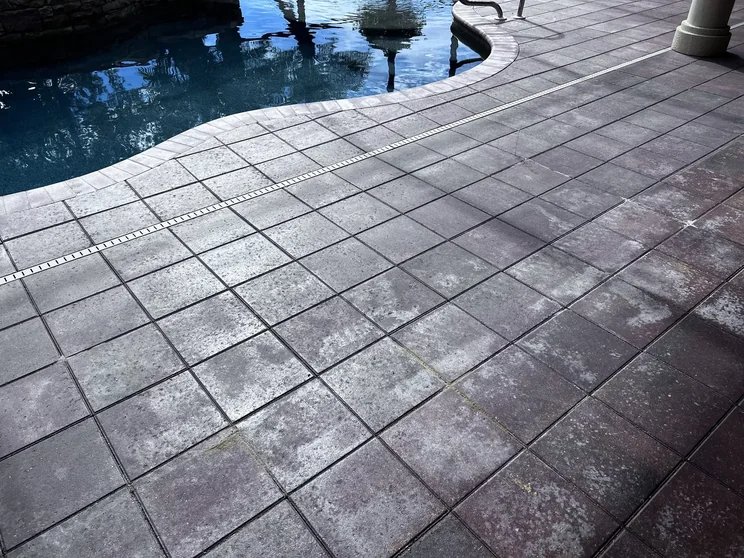
Cloudy, milky or white sealer
- What it is: Usually moisture trapped in or under the sealer film, which installers call "blushing." It's most common with solvent-based acrylics put down on damp pavers, or when rain hits before the sealer sets.
- Fix: Don't add another coat on top. That just traps the problem. A coating that has turned white usually has to be stripped so the pavers can be restored to a clean surface and resealed properly. See paver stripping and our article on why pavers turn white after sealing.
Efflorescence (white powder)
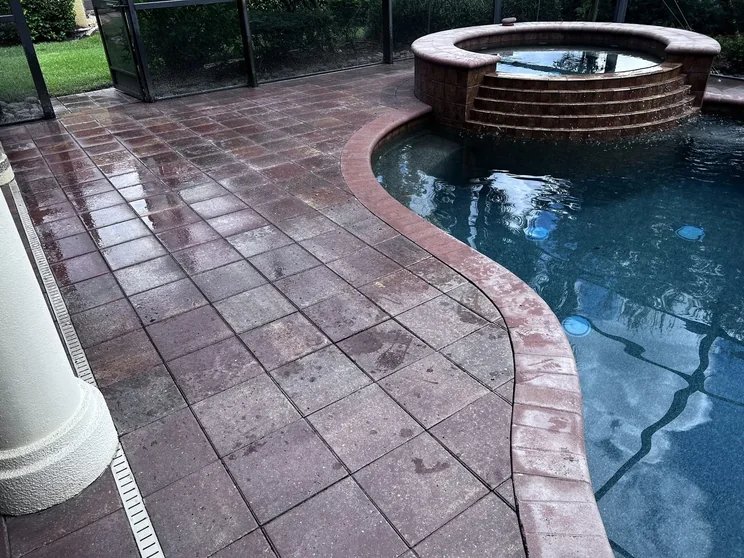
- What it is: A chalky mineral deposit that comes from inside concrete pavers. It's common on new installs and can show up whether or not the pavers are sealed. Unlike a cloudy sealer, it sits on the surface and often looks worse once the pavers dry.
- Fix: It's cleaned off with the right cleaner before sealing. That's also a big reason to wait before sealing new pavers.
Peeling or flaking
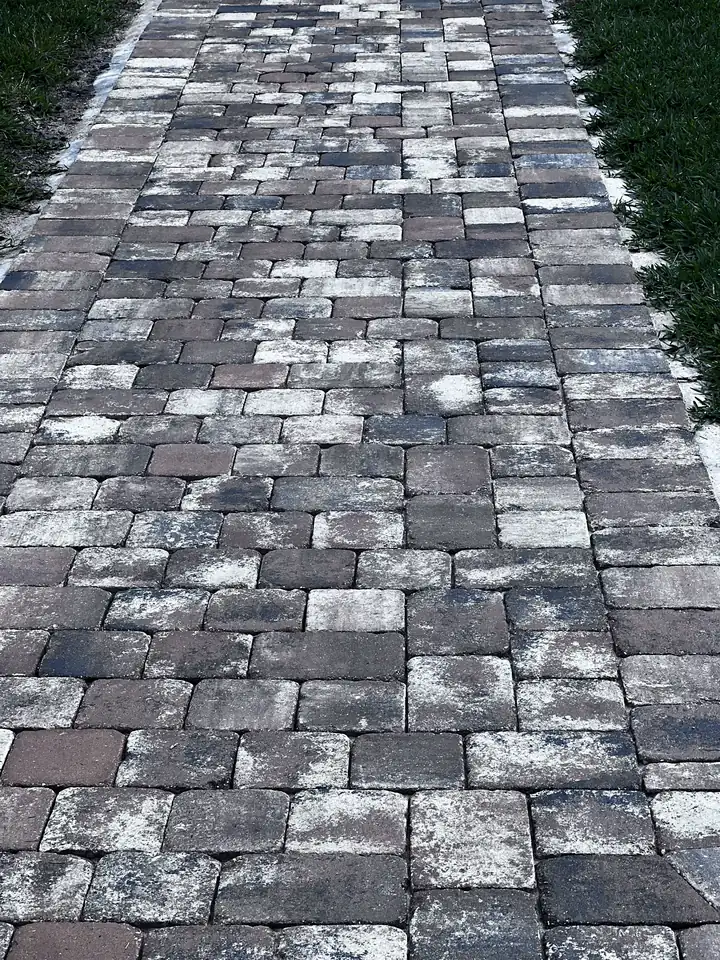
- What it is: The sealer has lost its bond with the paver. Common causes are sealing over dirt or old, incompatible sealer, layering coat after coat until the film is too thick, or moisture pushing up from below.
- Fix: Remove the loose and failed sealer by stripping, then reseal with a compatible product.
Slippery surface
- What it is: A thick, glossy film, especially on smooth pavers or around a pool.
- Fix: Use fewer, thinner coats, or go with a natural finish. Pavers don't need a grip additive. On natural stone and travertine, it's an option we can add.
Polymeric sand haze
- What it is: A thin film of polymeric sand's binder left on the paver faces when the sand wasn't swept off well before it was activated. It's common after DIY jobs or when another contractor used polymeric sand. We use fine mason sand, so our jobs don't leave polymeric haze.
- Fix: Clean the haze off before sealing. Sealing over it locks it in. We can clean it off for you before we seal.
12. Pool decks and travertine
Paver pool decks
Pool decks deal with splash-out, chlorine or salt water, sunscreen, bare feet and constant sun. What matters most:
- Slip resistance. Keep the finish reasonable. Paver pool decks don't need a grip additive. On natural stone and travertine, it's an option we can add.
- Chemical resistance. A cross-linked two-part urethane holds up to pool water better than a basic acrylic.
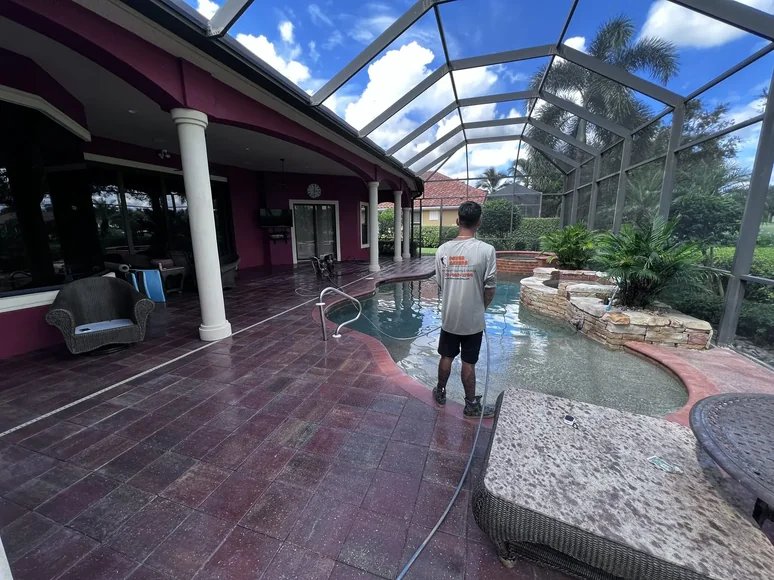
- Screened lanais. These stay damp and shaded, so mildew comes back faster. Regular gentle rinsing helps.
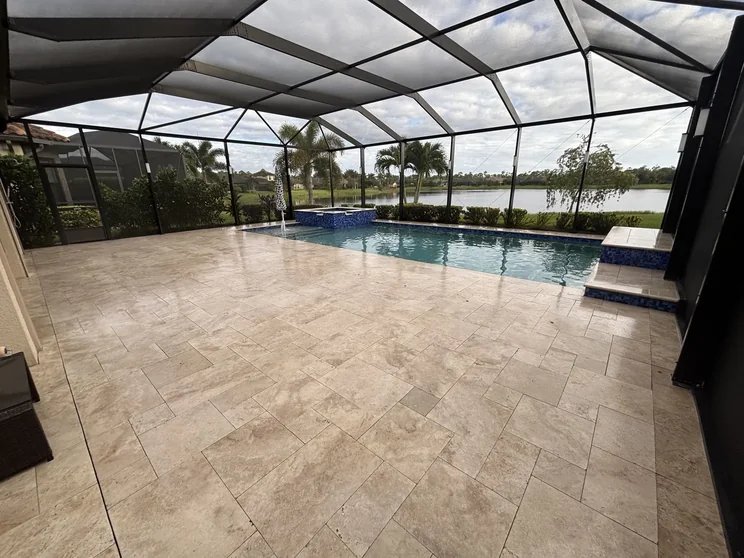
Travertine pool decks, patios and driveways
Travertine is natural stone, not concrete, and it needs different care:
- No acidic cleaners. Vinegar, lemon juice and many bathroom cleaners can etch and dull travertine (Natural Stone Institute).
- Gentler cleaning. Travertine has natural holes and a softer surface. Blasting it with high pressure can do damage.
- The right sealer and finish for the stone. Many owners want travertine to look natural rather than glossy.
- Optional grip additive. On travertine and other natural stone pool decks, a grip additive is an option we can add. Pavers don't need one.
We clean and seal travertine pool decks and driveways across Southwest Florida. See our travertine cleaning and sealing service and our travertine care and maintenance guide.
13. Aftercare: keeping sealed pavers looking new
- Rinse, don't blast. A garden hose and a soft broom handle most dirt. Skip the high-pressure wand, and never scrub with a wire brush. Its metal bits can leave rust spots.
- Clean spills fast. Oil, grease, wine, pool chemicals, fertilizer and leaves are all easier to remove before they sit in the sun.
- Aim the sprinklers away. If your irrigation water leaves orange stains, adjust the heads so they don't hit the pavers, or ask your irrigation company about iron treatment.
- Watch the joints after big storms. If you notice sand loss or a sunken spot, fix it early.
- Keep harsh chemicals off. Don't let pool acid, muriatic acid or strong cleaners sit on the pavers.
- Mark your calendar. Plan to reseal every 2 to 3 years, or join our annual maintenance plan and let us keep track.
14. Printable paver sealing checklist
Before sealing
- New pavers? Wait about 60–90 days, or until we confirm they're ready.
- Check the forecast. No heavy rain expected right after sealing.
- Plan to seal early in the day, before the pavers get sun-baked.
- Note any sunken, rocking or broken pavers to repair first.
- Look for white, cloudy or peeling old sealer that may need stripping.
- Decide on a finish: wet look or natural.
- Travertine or natural stone pool deck? Ask about the optional grip additive. (Pavers don't need one.)
- Move cars, furniture, grills and planters off the area.
- Turn off sprinklers that hit the pavers.
Sealing day
- Surface pressure cleaned.
- Stains treated (rust, oil, mildew).
- Repairs done.
- Joints refilled with fine mason sand and paver faces swept clean.
- Sealer mixed and applied evenly, with no puddles or lap marks.
After sealing
- Stay off for 1 hour (foot traffic).
- No vehicles until the next day.
- Sprinklers that hit the pavers stay off until the sealer has cured.
- Rinse gently, clean spills quickly.
- Reseal in 2–3 years, or yearly on the maintenance plan.
15. Paver sealing FAQ
How often should pavers be sealed in Southwest Florida?
Every 2 to 3 years. Our strong sun and heavy summer rain wear sealers faster than the 3-to-5-year schedules you'll see in national guides. If you're on our annual maintenance plan, your pavers are cleaned and sealed every year.
How much does paver sealing cost?
Most of our clients pay between $1.10 and $1.50 per square foot, which includes cleaning, joint sand and sealer. Where you land depends on the size of the area, how much cleaning it needs, the condition of the joints, and whether any repairs or stripping are needed. Every estimate is free.
How long after sealing can I walk or drive on my pavers?
You can walk on them after 1 hour and drive on them the next day.
Is sealing pavers worth it?
For most Southwest Florida driveways, pool decks and patios, yes. Sealing brings back color, locks joint sand against washout, cuts down weeds and ants, resists stains and makes cleaning easier. It usually costs less than repeatedly replacing sand, pulling weeds and releveling pavers that have shifted.
What is the best type of paver sealer for Florida?
We recommend a two-part water-based urethane. It forms a harder, more chemical-resistant film than acrylics, handles humidity better and locks joint sand. We seal with Cobble Loc by Surfacelogix, a Florida company making paver sealers since 1950.
Wet look or natural look: which should I choose?
It's personal taste. Wet look deepens the color and adds a soft sheen, like pavers just after a rain. Natural look keeps the pavers close to their bare appearance. Pavers don't need a grip additive with either finish. On natural stone and travertine, it's an option we can add.
How long should I wait to seal new pavers?
Industry guidance suggests about 60 to 90 days so efflorescence, the white mineral haze common on new concrete pavers, can come out and be cleaned off before sealing. We'll look at your installation and tell you when it's ready.
What happens if it rains after my pavers are sealed?
A light shower after the sealer has set is usually fine. A heavy downpour soon after application can leave spots or cloudiness, which is why we schedule around storms. If a surprise storm hits a fresh job, call us and we'll take a look.
Why did my paver sealer turn white or cloudy?
Usually because moisture got trapped in or under the sealer. That's common with solvent-based acrylics applied to damp pavers. Adding another coat won't fix it. The failed sealer usually needs to be stripped so the pavers can be restored and resealed.
Does joint sand go in before or after sealing?
Before. We refill the joints with fine mason sand and sweep the paver faces clean, then the sealer goes on and locks that sand in place. Polymeric sand is available if you request it.
Can you seal travertine pool decks?
Yes. Travertine is natural stone, so it needs gentler, pH-appropriate cleaning (no acidic cleaners) and a finish chosen for the stone. We clean and seal travertine pool decks and driveways throughout Southwest Florida.
Ready to seal your pavers?
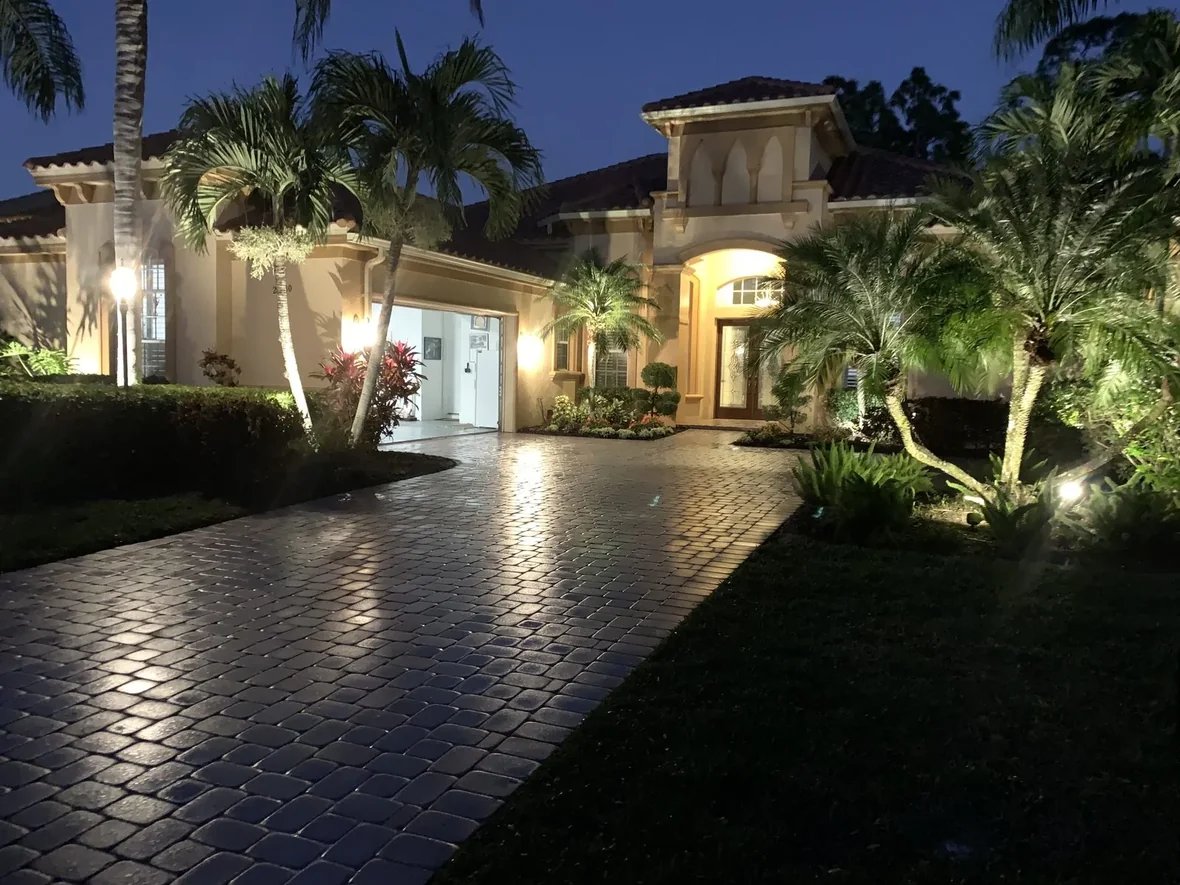
Paver Savers & Concrete, LLC has been cleaning, repairing and sealing pavers across Southwest Florida since 2010. We use only the highest quality two-part water-based urethane sealers. All work backed by a full one year warranty. Fully licensed and insured.
Call (239) 900-4410. We answer 24/7. Or request your free estimate.
Find your area: Fort Myers · Cape Coral · Naples · Estero · Bonita Springs · Lehigh Acres
See all our services or read what our customers say.

